Using the natural language of childhood to heal emotions, build resilience, and spark social joy.
Young children rarely have the mature verbal vocabulary to articulate complex emotional distress, anxieties, or developmental frustrations. For a child, play is the natural, instinctive medium through which they process experiences, make sense of social dynamics, and express inner emotions.
At Trishaa Neuro Development Clinic, led by Dr. Ekta J Daftari, our specialized play therapists use evidence-backed Child-Centered Play Therapy (CCPT), sand-tray therapies, and symbolic role-play. We create a nurturing space where children feel deeply understood, learn emotional self-regulation, and build reciprocal social bonds.
Play therapy provides a gentle, non-threatening avenue to resolve emotional barriers, social hesitation, and behavioral resistance.
Unexpressed fears, school phobia, clinginess, or behavioral regression following stress.
Struggles with symbolic imagination, pretend play, and spontaneous interaction with toys.
Frequent playground squabbles, aggression during games, or inability to share.
We combine child-led discovery with structured therapeutic techniques to nurture emotional security and social cognition.
Providing an unconditionally safe environment where the child leads play themes, releasing subconscious emotional tension.
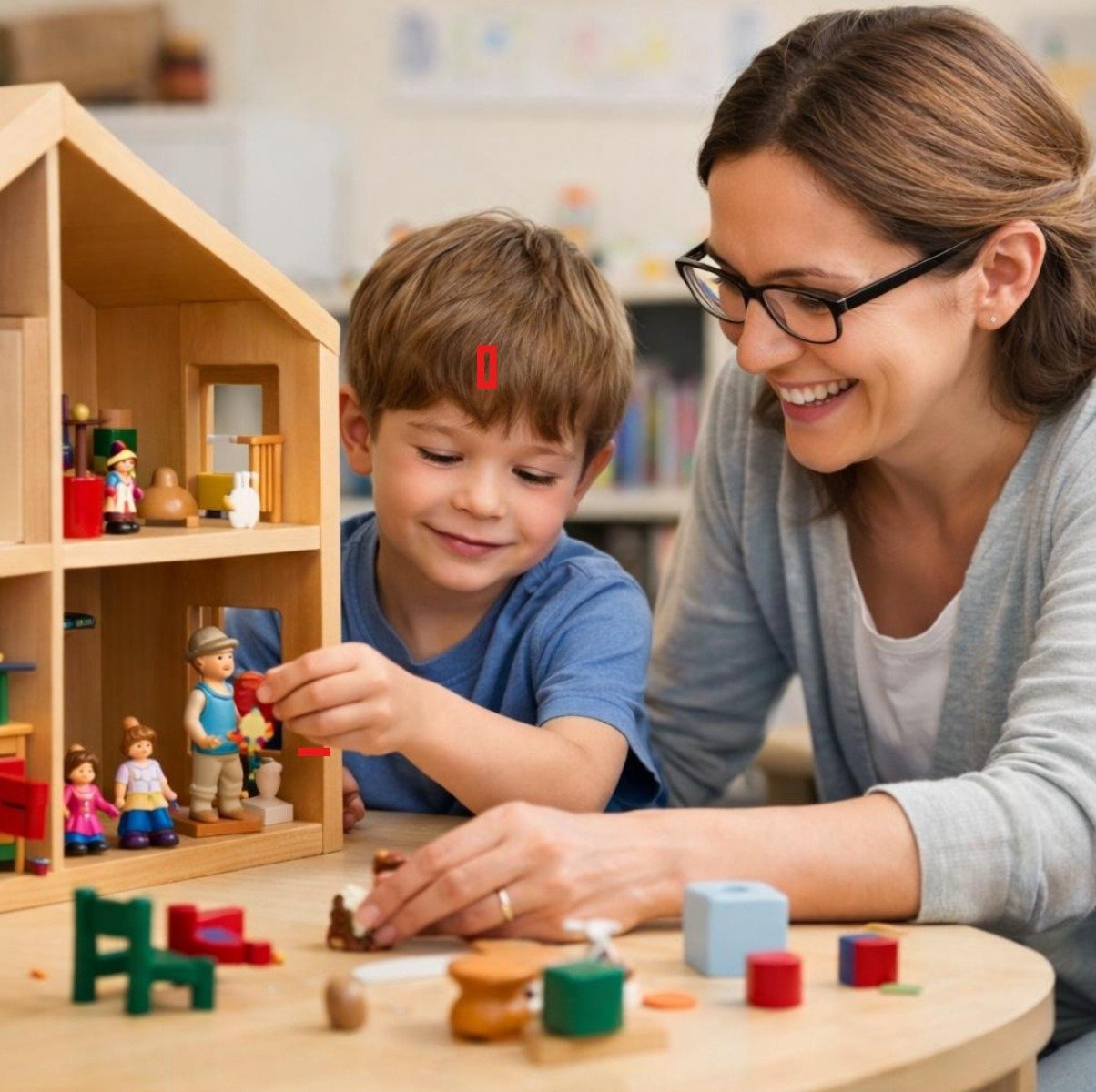
Using symbolic figurines and tactile sand trays to safely project inner world challenges, family dynamics, and emotions.
Developing theory of mind, empathy, cognitive flexibility, and problem-solving through imaginative roleplay scenarios.
Training parents in therapeutic play techniques to strengthen emotional bonding, trust, and secure attachment at home.
A clinical sequence designed to nurture expression from foundational sounds to fluent, spontaneous conversations.
Observing spontaneous toy choices, play complexity, emotional themes, and family background.
Establishing rapport, safety boundaries, and deep trust between the therapist and the child.
Utilizing therapeutic games, expressive arts, and role-play to process emotional distress and build social skills.
Debriefing parents with emotional interpretations and practical playtime interaction tips for home.
Observing positive behavioral shifts, increased peer play, and newfound emotional resilience.
Through play, children resolve subconscious distress, build self-confidence, and learn to connect deeply with others.
Children safely express deep worries, eliminating night terrors and chronic emotional tension.
Children learn to negotiate rules, adapt to losing, and cooperate joyfully in peer games.
Parents learn how to co-regulate with their child through reciprocal, joyful play interactions.
Transforms rigid, repetitive toy usage into dynamic, creative, and symbolic storytelling.
Have questions about how play therapy works at Trishaa Neuro Development Clinic? Here are answers to what parents ask most.
Consult Our Play TherapistsIn regular play, children play for entertainment. In Play Therapy, a clinically trained therapist uses specialized toys and techniques to observe, interpret, and guide the child through subconscious emotional hurdles, social problem-solving, and trauma resolution.
Our play therapy room is equipped with carefully categorized materials: real-life toys (dollhouses, family figures), aggressive release items (punching bags, foam swords, rubber animals), and creative expression media (sand trays, clay, paint, puppets).
Yes. For children with Autism, play therapy teaches reciprocal joint attention, expands repetitive play routines into imaginative scenarios, and builds the foundational non-verbal social skills required for peer friendships.
That varies from child to child depending on the diagnosis and the goal, for example whether the child is resolving a situational life stressor or working on long-term neurodevelopmental social communication skills.