Advanced therapeutic handling and neuromuscular re-education to facilitate natural movement and functional independence.
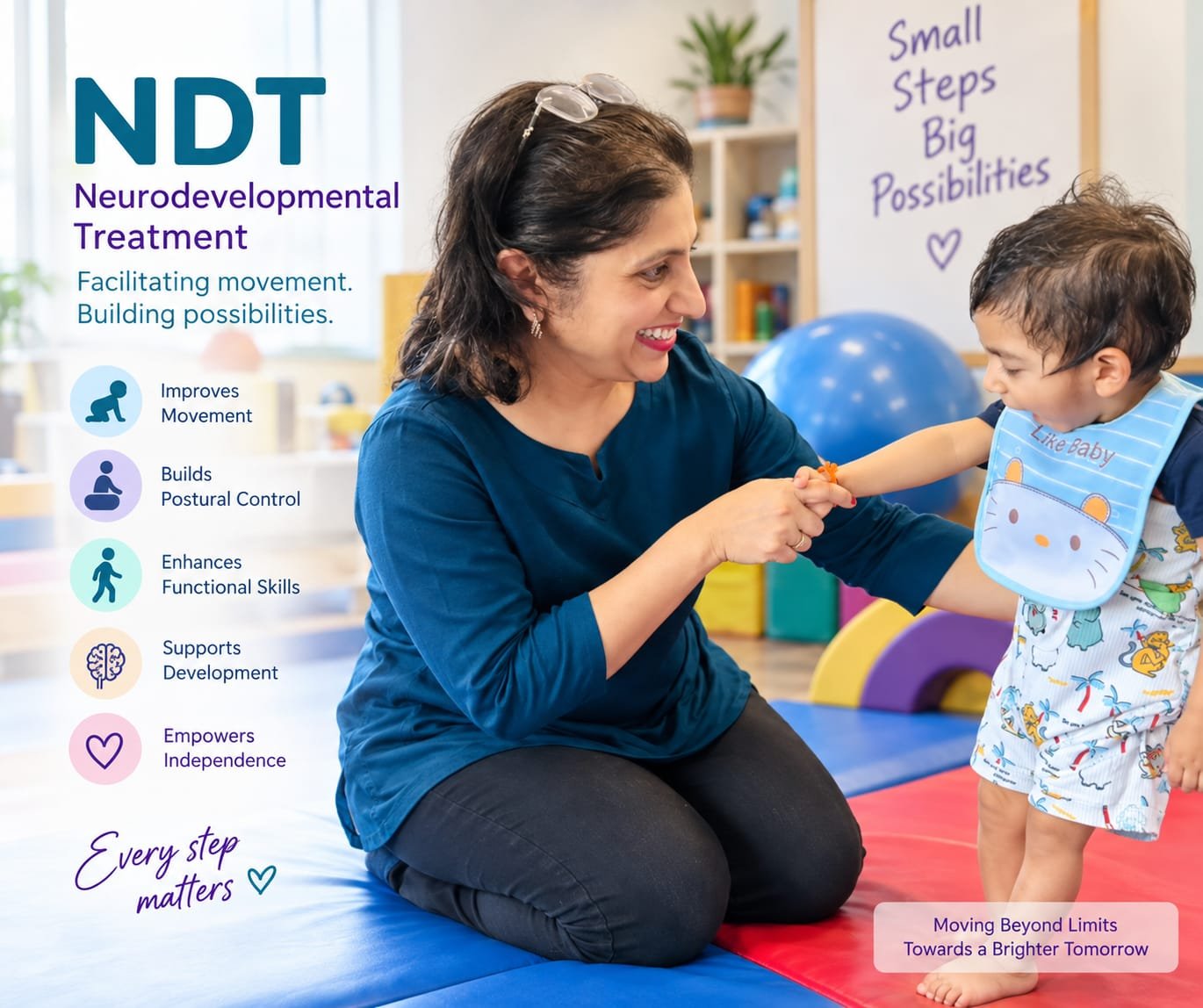
Neuro-Developmental Treatment (NDT) is an internationally acclaimed hands-on clinical approach. It is specifically designed to address movement, posture, and tone dysfunction in individuals with neurological impairments such as Cerebral Palsy, Stroke, and Traumatic Brain Injury.
At Trishaa Neuro Development Clinic, Dr. Ekta J Daftari (Certified NDT from NDTA, USA) plans and guides the therapists to use precise handling techniques at key points of control (head, shoulders, pelvis). By inhibiting abnormal reflex patterns and facilitating normal alignment, we help the patient's nervous system experience and memorize efficient, functional movement patterns.
NDT provides targeted handling to normalize atypical posture, reduce high spasticity, and enable active motor participation.
Severe muscle stiffness, abnormal co-contractions, or persistent primitive reflexes.
Weak trunk stability, head lag, pelvic malalignment, and poor righting reactions.
Compromised fine motor reach, hemiplegic arm fisting, and uncoordinated walking gait.
Therapeutic techniques designed to guide neuromuscular pathways toward natural, voluntary control.
Therapist hands guide movement at proximal points (pelvis, shoulders) to facilitate correct biomechanical alignment.
Gently suppressing abnormal muscle synergies and high tone before prompting voluntary active movements.
Using therapy balls, bolsters, and balance boards to stimulate natural equilibrium and protective righting reactions.
Embedding newly learned movement patterns directly into functional tasks such as drinking from a cup, dressing, and walking.
A sequence designed to ensure gradual, sustainable neuromuscular progress and functional independence.
Analyzing muscle tone, resting postural asymmetry, active mobility, and primitive reflex activity.
Establishing realistic, measurable physical targets (e.g. independent head hold, four-point kneeling, unassisted standing).
Intensive 1-on-1 therapy utilizing Bobath rolls, therapeutic benches, balance platforms, and manual facilitation.
Recommending specialized positioning aids, splints, and seating systems to maintain optimal posture throughout the day.
Empowering the patient and family to transfer motor control into eating, playing, and walking independently at home.
Neuromuscular re-education paves the way for greater comfort, reduced physical strain, and authentic motor autonomy.
Inhibits leg scissoring and toe-walking, facilitating a balanced heel-toe gait cycle with minimal effort.
Releases spastic finger fisting, enabling intentional reaching, grasping cups, and using writing instruments.
Regular dynamic handling and tone reduction prevent permanent bone misalignments and muscle contractures.
Strengthens core and pelvic stability so the child can sit comfortably in regular chairs at school and home.
Have questions about Neuro-Developmental Treatment at Trishaa Neuro Development Clinic? Here are answers to what families ask most.
Consult Our NDT SpecialistsConventional physical therapy often focuses purely on muscle strength and passive stretching. NDT focuses on the nervous system's control of movement—using specialized hands-on handling to change how the brain organizes movement, posture, and coordination.
NDT is primarily indicated for infants, children, and adults with neurological conditions such as Cerebral Palsy, traumatic brain injury, stroke (hemiplegia), hypotonia, developmental coordination disorder, and spinal muscular disorders.
No, NDT is completely gentle and non-invasive. The therapist works with the child's natural movement synergies, using alignment, graded weight-shifting, and playful handling rather than forceful stretching.
Our therapists teach parents specific "handling and carrying" postures (e.g. how to pick up, hold, feed, and seat the child) so that every daily routine reinforces therapeutic alignment.